Category Archives: Kanazawa

On the title of “Kanazawa-East, West, Shyu and North”

“Kanazawa-East, West, Shyu and North” is the work that has been defeated by applying for the 5th Izumi Kyouka Commemorative, Kanazawa Drama Grand Prize. It is a drama that I wrote with confidence as the author. In such competitions, judging criteria and methods are unclear, and there is nothing of convincing in the winning work at all. What I published it by our company is its revenge. Aside from that, if you are interested in the play, please check the story on this page. I write here about the origin of the title .

The stage of play is a Chaya district of Kanazawa City. Hanamachi (fleshpot), Kuruwa, or Chaya district are different words which mean the district where guests are entertained by geisha who perform song and dance.

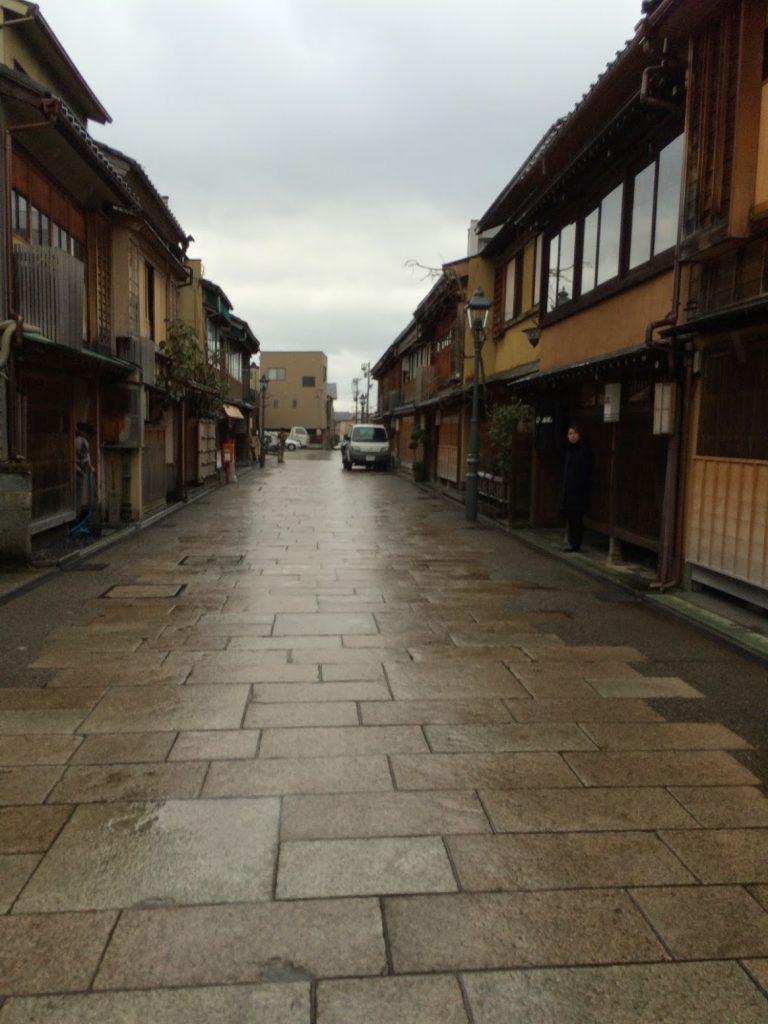
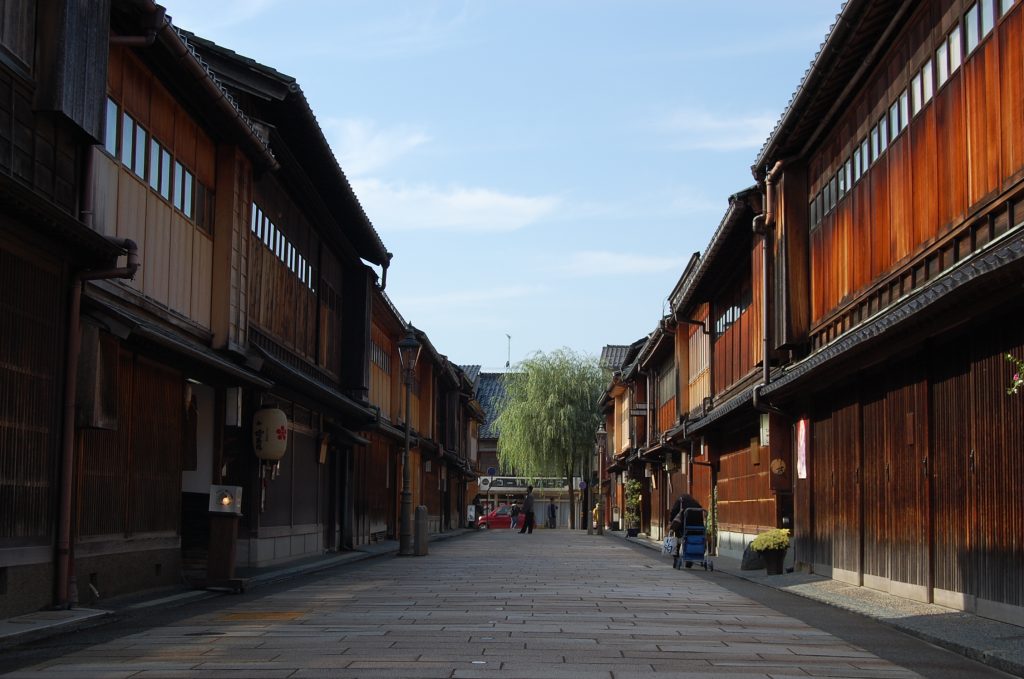
The book title “東西主北” that means “East, West Shu and North” are four Chaya districts in the city. Kanazawa ‘s Chaya street  (fleshpot) started from the Edo period, ”東” the East-hanamachi (Higashi Chayagai) and “西” West-hanamachi  (Nishi Chayagai) seems to have flourished relatively early.
Higashi Chayagai

Nishi Chayagai

The directions of this east / west are, of course, centered near Kanazawa castle, the south side where the samurai residences were gathering, was excluded. In addition, although it is said that “北” the northern chaya district had been in a relatively short period, it eventually was absorbed in East-hanamach and Kazuemachi was born as the third Chaya district, then Kanazawa has now three, well preserved chaya districts, Higashi Chayagai (Eastern Chaya District), Nishi Chayagai (Western Chaya District) and Kazuemachi. ”Shu” is the Chinese reading of a character of the first character ”主” of  主計町(Kazue Machi=native Japanese reading). Therefore, the title of the book was taken from the four old chaya districts.  So, today, the three tea houses (Chaya) of East-hanamachi (Higashi-Chaya), West-hanamahi (Nishi-Chaya) and the Kazuemadhi remained.

Kazuemachi Chayagai

Actually, I (the author) received a life in Kanazawa, and my grandmother was running a geisha house in Nishi Chaya. Although she closed her business before the world war II, it is not curious that there might be a chance to meet the writer Seijiro Shimada who lived in a chaya in Nishi chayagai with her mother. My grandmother married a elder brother of the former proprietress two generations back of a hot-pot dishes called “Taro” (the photo above is its main entrance ) prospering even now, and were teaching the shamisen and Kouta(a Japanese ballad accompanied on the samisen). In that sense my grandmother has always been a person in the flower 
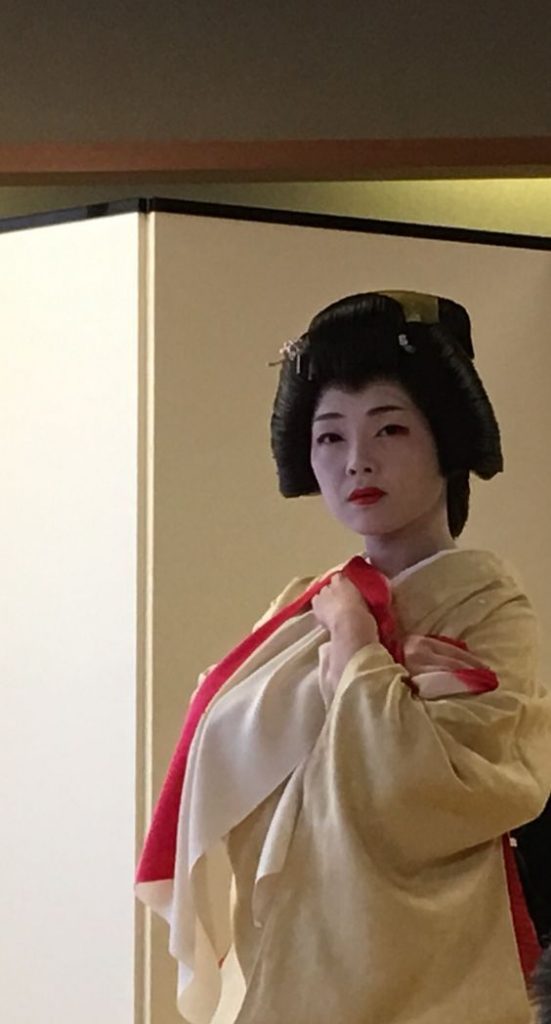
Geisha Momo-taro 1 in Kazuemachi Chayagai

Notes:

  1. she is my twitter friend. ↩

On Sheijiro Shimada

Seijiro Shimada is a character in our publication  “Kanazawa-East, West, Shyu and North“, and the drama took the material in the geisha houses in Kanazawa. Seijiro Shimada (born February 26, 1899- died April 29, 2009) is a writer of genius of premature death in 31 years. Besides the three great writers, Saisei Muroo, Kyoka Izumi, Shūsei Tokuda, Seijiro Shimada  is a unique existence.

In the drama, the landlady (the owner of the Geisha house) and Professor Kagami Izumi speak like this.


The landlady : “Seijiro Shimada died of illness confined in a psychiatric hospital. It’s written on the panel of the Yoshiyone-rô. “

Kagame Izumi : “So it appears. Concerning schizophrenia, it might be a preventive detention, If it is now. I think that the police at that time shut him in the hospital instead of a prison under the pretext of schizophrenia. He was considered a pioneer of a romance novel for young people. His novel is adapted for the screen by Daiei and the film is sold as a DVD. By Wikipedia, the masterpiece “On Earth” is televised by NHK Nagoya in 1962, adapted as a play by the troupe called New Cooperation Hokuriku.

How to say, in a sense, he loves Nietzsche and Dostoevsky, and I think he was a predecessor of our generation Zenkyôto (or Zengakuren). Anyway, I guess he’s a talented genius of the ability to write. Any judgment aside, all young men earn sociability and personality balanced with age in their own way. Like some students of Zenkyôto was increasingly radicalized by emphasizing the myth of revolution, Shimada was growing up in the Westernization of Japan, as the spirit of admirer, I think, towards the revolutionaries in the end of the Meiji period to the Taisho. Not only the literary world at the time, of course, but also the national police saw a dangerous factor in Shimada, the vanguard of radical molecules. In my opinion, people who made a film or a TV drama of his life, had some sympathy and nostalgia for him.”


Seijiro Shimada himself appears in the flashback sequence in the drama. The scene where he confesses light love feeling to Kikuno, childhood friend, illuminates the contrast mentality between Kikuno and Shimada. Kikuno, geisha of a teahouse expressed pride in her profession, while Shimada does not hide the strong inferiority complex to what he grew up in the Chaya (teahouses) district. Since my real grandmother is a model, as for Kikuno, this drama became a Deeply impressive work for me.

By the way, “ON EARTH” of Seijiro Shimada is filmized by the same name in 1957. In addition, his life is made a TV drama titled “Smile with full of tears – Seijiro Shimada, son of Meiji ” by NHK in 1995.


Enjoy «On Earth» by EPUB (in japonais).

Trial reading

Please enjoy “On Earth” in preview.
On Earth

This preview is allowed to use BiB / i (EPUB READER on your Website) by Mr. Satoshi Matsushima.

“On Earth” was transformed into EPUB from the original text of AOZORA BUNKO (Blue Sky Pocket Book). You can download the EPUB file (in Japanese).